Correction added 16 October 2026: The original version misstated the law's enactment year and described an unsupported 2029 expiry. The tax paragraph and suggested action have been corrected using the contemporaneous IRS guidance linked below. The original publication date is unchanged.
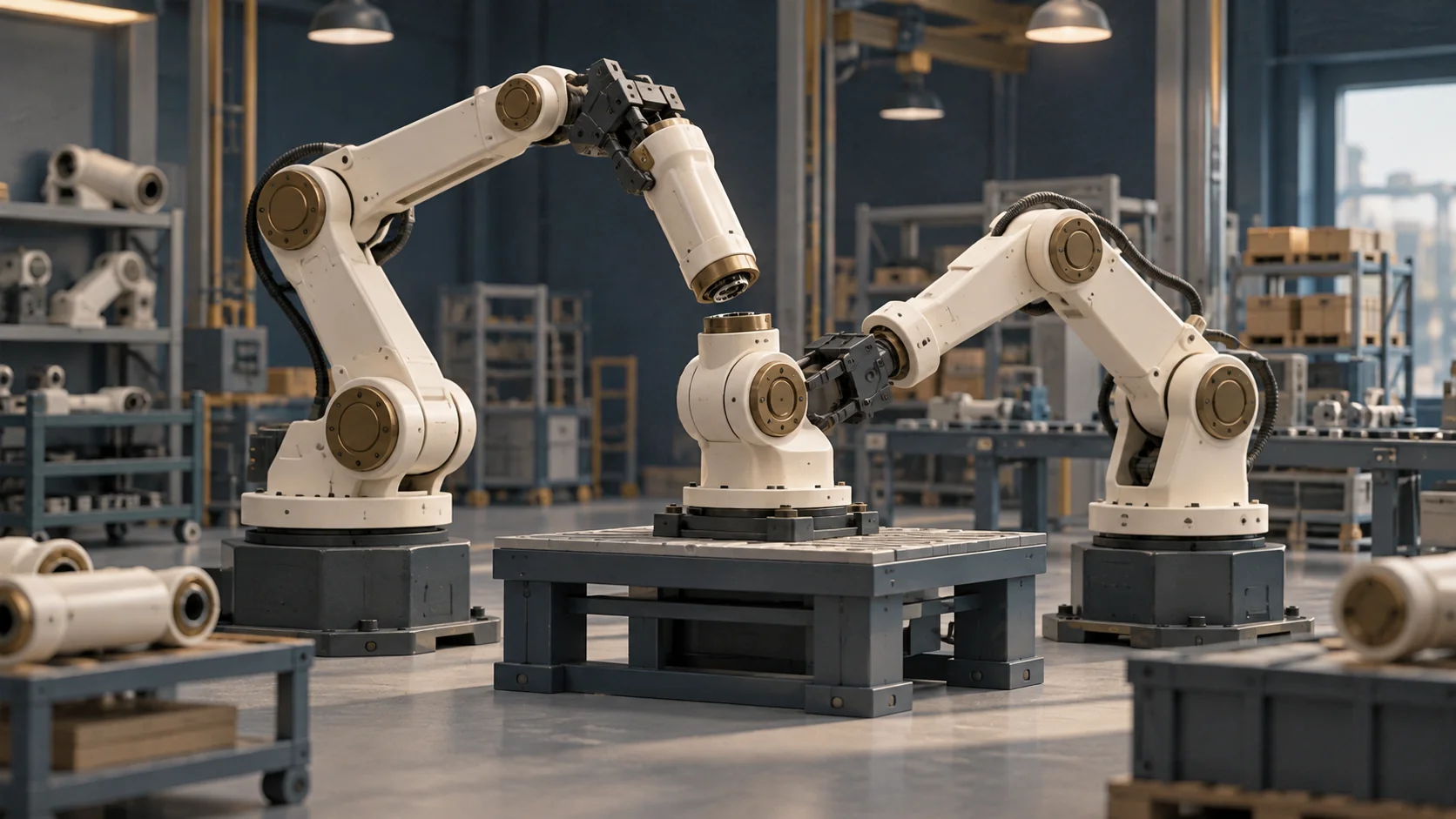
The world's largest industrial robotics company is no longer content to ship machines across the Pacific. FANUC America announced on 24 March a US$90 million investment in a new 840,000-square-foot robot manufacturing facility in Pontiac, Michigan, targeted for completion in late 2027. The facility will add 225 jobs and bring FANUC America's cumulative US investment to nearly US$300 million across multiple Michigan locations.
Ninety million dollars is significant. The strategic signal is larger.
Three Forces Converging on One Factory
FANUC's decision to manufacture robots domestically, rather than importing them from its parent company's plants in Oshino, Japan, aligns with three forces reshaping the economics of industrial automation in North America.
The first is demand. The International Federation of Robotics recorded 393,700 industrial robots operating in US factories in 2024, a 3 per cent year-on-year increase. Annual installations stood at 34,200 units.
Those numbers look modest next to China's 295,000 annual installations, but the trajectory matters. US installations are 30 per cent higher than a decade ago, and the 425,000 unfilled manufacturing jobs reported by the National Association of Manufacturers continue to push adoption forward.
Tax policy has also changed the investment calculation. The One Big Beautiful Bill was signed on 4 July 2025. IRS guidance issued on 14 January 2026 describes permanent 100 per cent additional first-year depreciation for eligible property acquired after 19 January 2025. Eligibility and elections determine the treatment of an individual purchase; this does not establish an automatic deduction for every robot acquisition.
Technology integration seals the case. The Pontiac facility will embed physical AI, virtual commissioning, and digital-twin capabilities alongside robot production. FANUC's partnership with NVIDIA, announced at GTC 2026, brings Isaac Sim and Omniverse simulation tools into the same production environment where the hardware is built. Buyers will be able to model, test, and commission robotic work cells digitally before equipment arrives on the factory floor.
China installed nearly nine times more factory robots than the United States in 2024. FANUC's Pontiac facility is one answer to that arithmetic.
The Competitive Landscape Is Moving in the Same Direction
FANUC is not alone. ABB committed US$110 million to expand US manufacturing in September 2025, creating nearly 200 jobs across facilities in Mississippi, Virginia, and North Carolina. Yaskawa announced a US$180 million manufacturing facility in Wisconsin. The pattern across the Big Four robotics OEMs is unmistakable: all are localising robot manufacturing for North America.
The competitive pressure is structural. Tariff exposure on imported automation equipment, shorter delivery lead times from domestic production, and the ability to integrate AI simulation tools closer to end customers all favour local manufacturing. KUKA, the fourth major player, faces a different calculation: since its 2017 acquisition by China's Midea Group, its geopolitical positioning in the US market has grown more complex as trade tensions escalate.
What distinguishes FANUC's play is the pre-production technology layer. Virtual commissioning and digital-twin integration are not aftermarket add-ons at the Pontiac facility. They are built into the production pipeline. A manufacturer ordering FANUC robots from this facility gets hardware that arrives with its simulation model already validated, cutting deployment timelines from months to weeks.
What This Means for Manufacturing Leadership
For CTOs and engineering directors evaluating automation roadmaps, the Pontiac facility changes the procurement calculus. Domestic production means shorter lead times, reduced tariff exposure, and robots arriving with digital-twin integration ready from day one. The question is not whether to automate but whether current vendor relationships and capital planning account for these new economics.
Review robot capital expenditure plans against operational needs and the applicable tax rules. The earlier recommendation to accelerate purchases before a supposed 2029 expiry is withdrawn. FANUC's planned late-2027 production date remains a procurement consideration, but it does not create the tax deadline described in the original article.
Source: FANUC America Invests $90M to Expand U.S. Robot Manufacturing Category: Autonomous Robots | Impact: High Impact | Pillar: Industry 4.0